Socializing a Coonhound With Kids, Dogs and Strangers
General training information. Every dog is an individual; for health or behavior concerns, see your veterinarian.
Coonhound socialization is about teaching a nose-driven, people-loving hound to stay calm and curious around the world instead of overwhelmed or overexcited. This guide walks through a plan you can follow at home, one small step at a time.
One note on scope. The American Kennel Club recognizes six coonhound breeds, and the breed details here cover the Black and Tan Coonhound only. If you own a Bluetick, Plott, Redbone, Treeing Walker or American English, use the plan as a general frame and check breed details with your breed club.
What to Expect From the Breed
Hill's Pet describes the Black and Tan Coonhound as responsive, intelligent and loyal, and passionate about his work. It says the breed is generally outgoing and friendly, though some dogs are reserved with strangers. That last part matters. Do not assume your hound will love every new person on day one.
If you are wondering whether coonhounds are good with kids, Orvis describes the Black and Tan as devoted to family and kind and gentle with people of all ages. Orvis is a retailer's breed page, not an AKC rating, and every dog is an individual. Treat it as a good sign, not a promise.
For coonhound with other dogs, Vetstreet says the Black and Tan should never be aggressive toward other dogs. Again, that describes what is expected of the breed, not what your dog will do. Your job is to build good experiences so the best version of that temperament shows up.
Orvis also lists the challenges: easily distracted, not always willing to do as asked, a habit of chasing scents, and howling. Hill's says training can be more challenging than with other breeds and needs patience and consistency. Keep all of this in mind as you plan. A hound who is busy sniffing is not being rude. He is being a hound.
Materials You Will Need
- A flat collar or well-fitted harness and a standard 6-foot leash
- A long line for practice in open spaces, used only with a flat collar or harness
- Small, soft food rewards your dog loves (Embrace Pet Insurance notes food rewards work well for this breed)
- A mat or blanket for a settle spot
- A baby gate or exercise pen to create a safe retreat from visitors
- A chew or stuffed toy for quiet time
- A securely fenced yard if possible, as Vetstreet recommends for the breed
- Calm, willing helpers: an adult friend, a gentle child you know well, and a neighbor with a friendly, vaccinated dog
Step-by-Step Socialization Plan
Step 1: Check In With Your Veterinarian First
Before you take your hound to places where other dogs have been, ask your veterinarian which vaccines and precautions your dog needs. A vet can also tell you what is safe for a puppy at his current age. Do not skip this step, and do not let eagerness to socialize outrun your dog's health.
Step 2: Burn Off Energy Before Every Session
Hill's lists the breed's energy as laid back, yet it also says vigorous daily exercise is a must. Vetstreet suggests at least a half-hour walk once or twice a day, on leash, and Hill's says more than 40 minutes a day. A hound who has had a good sniffing walk learns better than one bouncing off the walls.
Let the walk before a training session be a sniffy one. Scent work tires a hound out in a way that fast walking does not.
Step 3: Build a Calm Home Base
Teach your dog to settle on a mat. Reward him for lying down on it, then for staying a few seconds longer, then longer again. Add a chew toy once he is relaxed.
This mat becomes your tool for every social situation that follows. A dog who knows how to settle can watch visitors, children and other dogs without getting wound up. For more on foundation skills, see our complete guide to training a coonhound.
Step 4: Start With Strangers at a Distance
Walk to a spot where you can see people from far away, such as the edge of a quiet park or a sidewalk across the street. Each time your dog notices a person, calmly reward him. Do not ask him to do anything yet. You are teaching one lesson: people appearing means good things happen.
Move closer over several sessions as long as your dog stays relaxed. If he stiffens, stares or pulls hard, you are too close. Increase the distance and try again.
Because Hill's notes some Black and Tans are reserved with strangers, never push a hesitant dog into a greeting. Ask visitors to ignore him at first, stand sideways, and toss a treat on the floor near him. Let him decide when to approach.
Step 5: Introduce Children Safely
Children and dogs should always be supervised by an adult who is paying full attention, not just in the same room. Teach children these basics before the dog is in the picture:
- Pet gently on the shoulder or chest, not the face or head
- Never hug, ride or chase the dog
- Leave the dog alone when he is eating, chewing or resting on his mat
- Stand still like a tree if the dog gets too excited
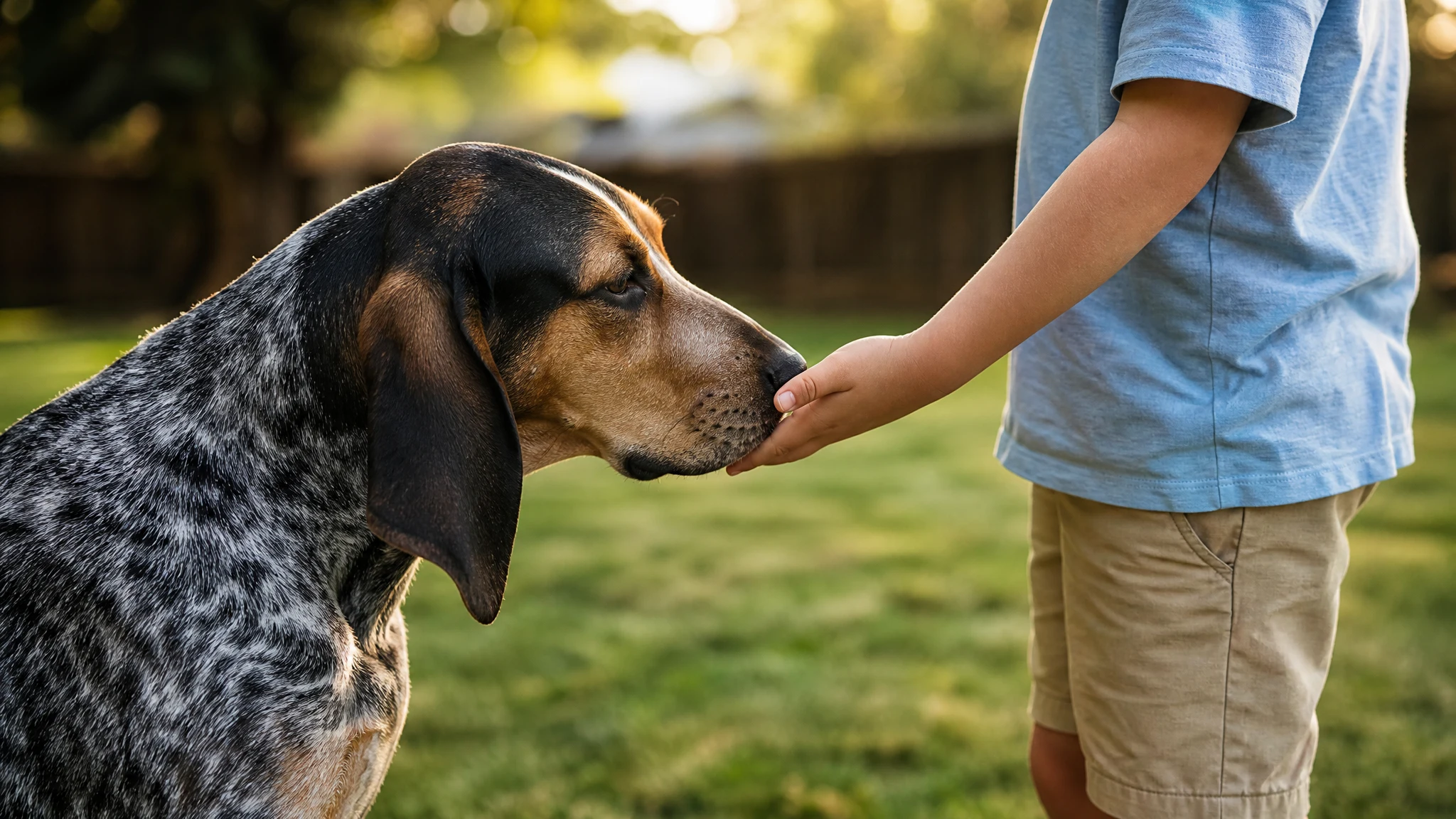
Start with the dog on leash and the child sitting down. Let the child offer a treat with a flat palm. Keep sessions short and end while your dog is still happy.
Watch your dog's body. Lip licking, yawning, turning away, a tucked tail or a hard stare are signs he wants space. Give it to him right away. A dog who can leave when he needs to rarely feels the need to do anything more.
Our sources do not flag guarding or herding behavior around children for this breed, so do not assume it is an issue. Still, every dog is different. If you see growling, stiffness or snapping around kids, separate them and call a qualified, reward-based trainer or your veterinarian.
Step 6: Introduce Other Dogs on Neutral Ground
For coonhound with other dogs, the first meeting should happen somewhere neutral, not in either dog's home or yard. Choose a calm, healthy, vaccinated dog whose owner you trust.
- Begin by walking the dogs parallel to each other, with plenty of space between them.
- Reward each dog for looking at the other and then back at you.
- Gradually decrease the distance over several walks.
- When both dogs look loose and relaxed, allow a brief sniff on loose leashes, then walk on.
- Keep early greetings to a few seconds. Leave on a good note.
Avoid tight leashes where you can. A taut leash can add tension. Keep your own hands soft and your voice cheerful.
Be careful of scent distractions. Orvis notes this breed chases scents, so in an off-leash setting a hound may leave the dog he is meeting to follow a trail. Use a long line and keep all outings on leash. Vetstreet also advises on-leash exercise, and a fenced yard when possible.
Step 7: Practice in More Places
Once your dog does well at home and on quiet walks, add new settings one at a time: a pet-friendly shop entrance, a friend's porch, a sidewalk with light foot traffic. Bring your mat and treats. Keep each outing short.
Change only one thing at a time. If you add a new place and a new person together, you will not know what caused trouble if it arises.
Step 8: Teach a Reliable Check-In
Because hounds get distracted, a strong "look at me" habit helps in every social setting. Say your dog's name, and reward him the instant he looks at you. Practice indoors first, then in the yard, then on walks with more distractions.
Embrace Pet Insurance recommends beginning early with positive reinforcement. Hill's says the breed needs patient, consistent training. Both point to the same plan: short, upbeat sessions, repeated often.
Tips for Success
- Use better treats around bigger distractions. A hound whose nose is full of interesting scents needs a reward that beats them.
- Keep sessions short. Five minutes of focused work often beats a long, frustrating session.
- Plan for howling. Orvis lists howling as a breed challenge. Reward quiet moments, and let neighbors and houseguests know your dog may be vocal.
- Give your dog an exit. Always let him move away from people, children or dogs without being followed.
- Stay consistent. Everyone in the household should use the same rules and cues.
Common Mistakes to Avoid
- Flooding. Taking a nervous dog into a crowd to "get him used to it" can make fear worse.
- Forcing greetings. Letting every stranger pet your dog teaches him that he has no say.
- Unsupervised time with children. Even a gentle dog and a well-meaning child need an adult watching.
- Scolding growls. A growl is a warning. Punishing it can remove the warning without fixing the cause. Give space and get professional help.
- Using harsh tools or punishment. The American Veterinary Society of Animal Behavior supports reward-based training. Shock, prong and choke collars, alpha rolls and scruffing have no place in socialization.
- Letting the dog off leash too soon. A hound who catches a scent may not hear you at all.
Expected Results
With patient, regular practice, many coonhounds become calmer and more comfortable around new people, children and dogs. You may notice your dog recovering from surprises more quickly, looking to you for guidance, and settling on his mat while visitors come and go.
Progress varies a lot from dog to dog. Some hounds warm up in a few weeks, and others need months. Setbacks are normal, especially when a new trail scent or a loud neighbor dog gets in the way. Results cannot be promised, but steady, kind training gives your dog the best chance to build confidence.
When to Get Help
If your dog shows persistent fear, snapping, or any sudden change in behavior, talk to your veterinarian first. Pain or illness can change how a dog acts. Sources list health concerns for the breed, including ear infections from floppy ears, so a vet check is a sensible first step. Your vet can also refer you to a qualified, reward-based trainer or behavior professional.
To find local classes, clubs or trainers, check with the American Black and Tan Coonhound Club or your area's reputable training facilities. We have not confirmed the club's web address, so ask your veterinarian or a local hound group for current contact details.