Leash Training a Coonhound: Pulling, Lunging and Loose-Leash Walking
General training information. Every dog is an individual; for health or behavior concerns, see your veterinarian.
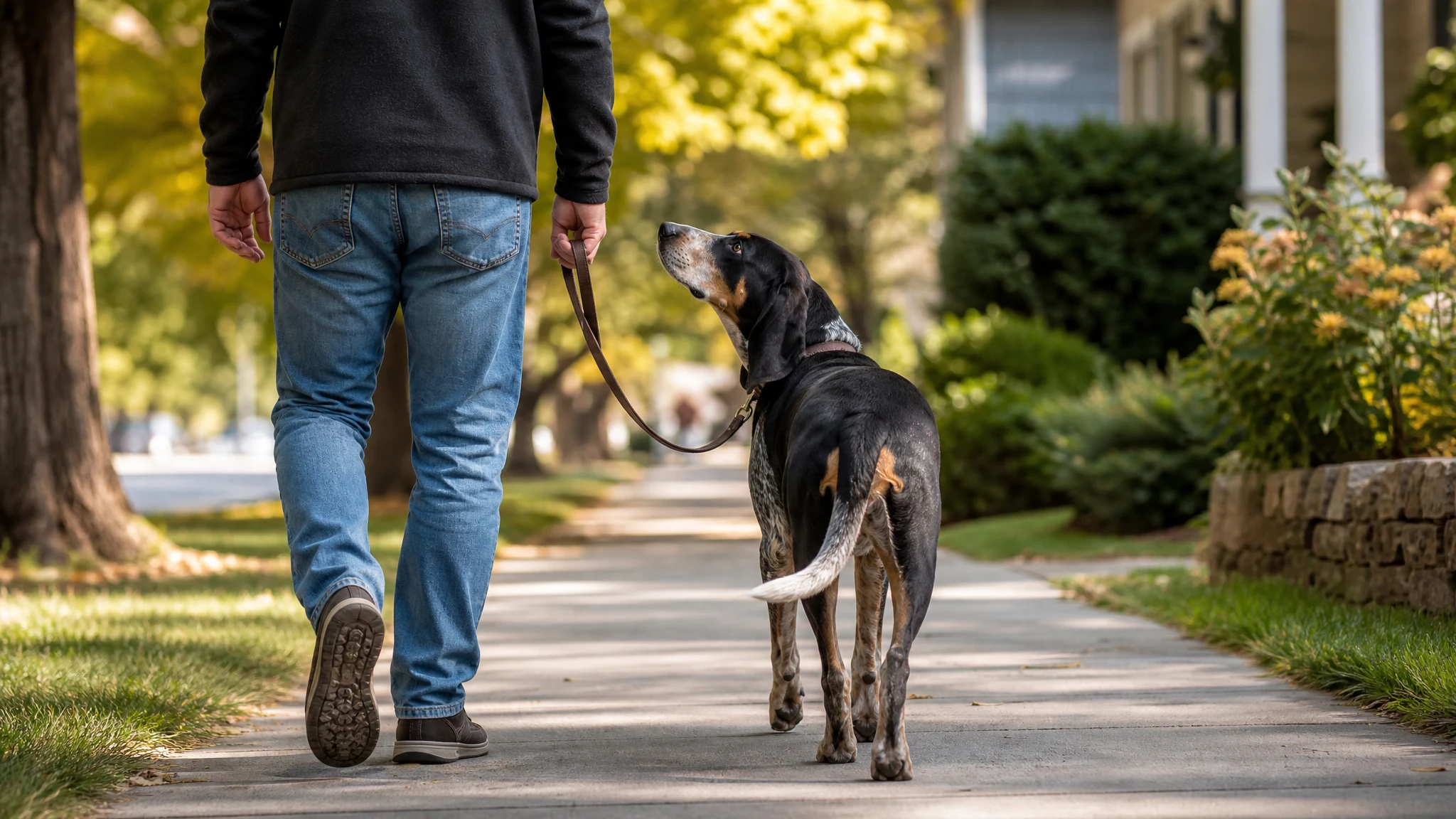
If you live with a coonhound, you probably know the feeling of being towed down the sidewalk by a nose on a mission. Coonhound leash training is less about stopping that nose and more about teaching your dog that walking next to you pays better than dragging you along.
This guide shows how to leash train a coonhound with patience, treats and short, repeatable sessions. It also covers what to do when pulling turns into lunging.
A note on scope: the AKC recognises six coonhound breeds. The breed details here come from sources on the Black and Tan Coonhound. If you have a Bluetick, Redbone, Plott, Treeing Walker or American English, the training steps still apply, but check with your breed club for traits specific to your dog. Every dog is an individual.
Why Coonhounds Pull on the Leash
Coonhound pulling on leash is not stubbornness for its own sake. It comes from what the breed was built to do.
According to Vetstreet, the Black and Tan Coonhound was developed in the southern United States in the late 18th century from Foxhounds and probably the Bloodhound. Hill's Pet Australia describes the original job as raccoon hunting, working as a trail and tree hound. A dog bred to follow a scent trail for hours is going to treat your neighborhood like a newspaper.
Orvis lists easy distraction and scent chasing among the breed's known challenges, and advises keeping these dogs on leash. Hill's Pet Australia also notes that the breed can be more challenging to train than some others and needs patient, consistent work. Hill's calls the temperament responsive and intelligent, and describes these dogs as passionate about their work. That passion is useful once you point it in a direction you both like.
So when your hound surges ahead, it is usually following a smell. Pulling works for the dog because it gets him to the smell faster. Your job is to change that math.
Materials You Will Need
- A flat collar or a front-clip harness. Either can work. A front-clip harness attaches at the chest, which can make it harder for a dog to lean into the pull. A flat collar is fine for a dog who is learning not to pull. Whichever you choose, check that it fits snugly without rubbing.
- A standard 4 to 6 foot leash. Skip retractable leashes. They teach a dog that pulling extends the leash, which is the opposite of what you want.
- Small, soft, high-value treats. Embrace Pet Insurance notes that food rewards work well for this breed. Use pea-sized pieces so you can reward often without overfeeding. Count them toward your dog's daily food.
- A treat pouch so rewards are quick to reach.
- A securely fenced yard or quiet street for early practice.
What not to use: prong collars, choke chains and shock collars. The American Veterinary Society of Animal Behavior (AVSAB) recommends reward-based training and advises against aversive tools, which can cause fear and stress and may make reactivity worse. Leash jerks and "corrections" are not part of this plan.
Before You Start: Meet the Exercise Need
A dog who has not had enough exercise will find loose-leash walking much harder. Vetstreet suggests at least a half-hour walk once or twice daily, on leash, along with a securely fenced yard. Hill's Pet Australia says more than 40 minutes a day. The sources differ a little, so ask your veterinarian what suits your dog's age and health.
Do not treat training walks as the only exercise. Add sniffing time, play in the yard and a few longer outings. Teaching manners to a dog who is bursting with energy is a losing battle.
How to Leash Train a Coonhound: Step by Step
Work in short sessions of five to ten minutes. Start somewhere boring, such as a hallway, a garage or a fenced yard. Move to harder places only when the easy ones go well.
Step 1: Make the gear a good thing
Put on the collar or harness, give a treat, then take it off. Repeat a few times over a few days. Then clip on the leash indoors and let your dog drag it for a minute while you feed treats. The aim is for your dog to link the leash with good things, not with being restrained.
Step 2: Teach your dog where the reward lives
Stand with your dog on your left or right, whichever side you prefer, and stick to it. Hold treats at your hip. Each time your dog is beside you, say "yes" and give a treat right next to your leg. Take a step, reward, take another step, reward.
At this stage you are paying for position. Your dog should learn that the spot beside you is where the good stuff happens.
Step 3: Add a name cue and a check-in
Say your dog's name or a cue such as "with me" and reward when your dog looks at you. Hounds are easily distracted, so rewarding eye contact gives you a way to pull attention back from a scent. Practice this at home first, then in the yard.
Step 4: Walk a few steps at a time
Take three to five steps with a loose leash, a "J" shape hanging between you, and reward often. Gradually stretch to ten steps, then twenty. If you can give a treat before the leash tightens, you are doing it right.
Step 5: Stop when the leash goes tight
The moment the leash goes tight, stop walking. Stand still and stay calm. Do not yank or pull back. When your dog looks back at you or the leash slackens, say "yes," reward and walk on.
You can also turn and walk the other way when the leash tightens. Reward your dog for catching up and coming into position. Either approach teaches that tension stops the walk and slack keeps it going.
Step 6: Use the scent as the reward
This one suits a trail hound. Pick a spot where you are happy for your dog to sniff, and teach a release word such as "go sniff." Walk with a loose leash for a short stretch, then say your cue and let your dog investigate. Sniffing becomes the paycheck for walking nicely, which uses the breed's drive instead of fighting it.
Step 7: Add distractions slowly
Move to the front yard, then a quiet street, then busier places. Each new setting is a new test, so go back to rewarding often. If your dog pulls hard in a new place, you moved too fast. Give more distance and more treats.
Loose-Leash Games to Keep It Fun
Games make practice feel less like a chore, and they help a distractible dog stay tuned in.
- Treat scatter. Toss a few treats on the ground and let your dog find them, then walk a few steps and repeat. This lets a nose-driven dog use that nose in a way that suits you.
- Red light, green light. Walk, stop suddenly, and reward your dog for stopping with you. Then say "go" and move again. It builds attention and impulse control.
- Pivot and reward. Walk in a zigzag or a figure eight. Your dog has to keep checking where you are going, which makes forging ahead less rewarding.
- Sniff stations. Stop at planned spots for a short sniff break, then ask for a few steps of loose-leash walking before the next one.
Dealing With Lunging
Lunging is different from ordinary pulling. A dog may lunge at squirrels, other dogs, bikes or people. The reasons vary: excitement, frustration, fear or prey drive. Hill's Pet Australia describes the breed as generally outgoing and friendly, though some are reserved with strangers, and Vetstreet says these dogs should never be aggressive toward other dogs. Still, any individual dog can lunge for reasons that need a closer look.
If lunging is intense, comes with growling or seems fear-based, talk with your veterinarian and consider a qualified reward-based trainer or veterinary behaviorist. Do not punish a lunging dog. Punishment can make the dog link the trigger with something unpleasant, which often makes things worse.
For everyday lunging at triggers, try this:
- Find your dog's threshold. This is the distance at which your dog notices the trigger but can still take a treat and respond to you.
- Stay under it. Keep that distance. Cross the street or step behind a parked car if needed.
- Mark and reward the sight of the trigger. When your dog looks at the squirrel or the other dog and then looks back at you, say "yes" and give a treat.
- Move away calmly if your dog goes over threshold. Do not scold. Just create distance and try again later with more space.
- Close the distance slowly over many sessions, only as fast as your dog stays relaxed.
Because the breed follows scent and sight, keep your dog on leash in open areas. Orvis specifically advises this for scent chasers. A hound who catches a trail can ignore your recall completely.
Tips for Better Walks
- Keep sessions short and end on a win. Stop while your dog is still doing well.
- Be consistent. Hill's Pet Australia stresses patient, consistent training for this breed. If one family member allows pulling and another does not, progress will be slow.
- Start early. Embrace Pet Insurance recommends beginning early with positive reinforcement. Adult dogs can learn too, but habits take longer to change.
- Reward more than you think you need to. You can thin out treats later.
- Pay attention to timing. Reward the moment your dog is in the right spot, not several seconds later.
- Plan your route. Choose quieter times and places while your dog is learning.
- Watch the ears and the nose. If your dog suddenly locks onto a scent, calmly stop and wait, or use your "go sniff" cue rather than fighting a losing battle.
Common Mistakes to Avoid
- Letting pulling work sometimes. If a tight leash gets your dog to the interesting smell even once in a while, pulling stays alive. Be consistent.
- Using harsh gear or leash jerks. These go against AVSAB guidance and can damage trust.
- Expecting too much too soon. A dog bred to follow trails will not heel perfectly on day one.
- Skipping exercise. A tired, satisfied dog learns better.
- Using retractable leashes. They reward pulling and give you little control.
- Training only when frustrated. Practice in calm moments so your dog knows the rules before the hard walks.
- Forgetting health. If a normally comfortable dog suddenly pulls, hangs back or seems sore, check with your veterinarian. Embrace Pet Insurance lists hip dysplasia among the breed's common health issues, and pain can change how a dog walks.
What Results to Expect
With regular, patient practice, many dogs begin to walk more calmly on a leash over several weeks. Progress varies a great deal between dogs, and a breed bred for scent work may take longer than average. You may notice shorter bursts of pulling, quicker check-ins with you and faster recovery after a distraction.
Expect setbacks in new places or around big triggers. Consistent practice may make those setbacks shorter over time, but no method works for every dog. If you are stuck, a qualified reward-based trainer can help you tailor a plan.
For a wider look at manners, recall and early lessons, see our complete guide to training a coonhound.