How to Potty Train a Coonhound Puppy
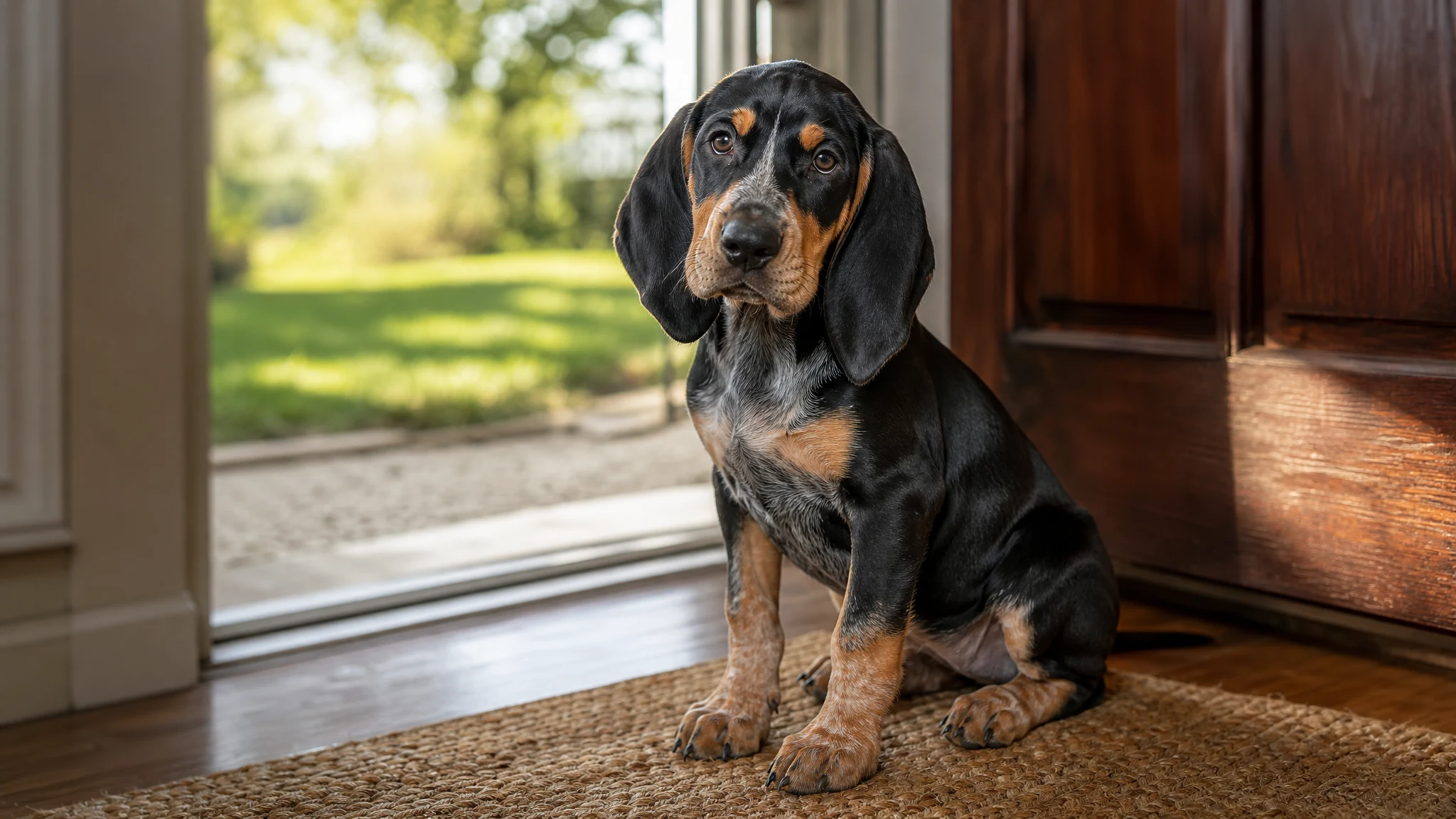
General training information. Every dog is an individual; for health or behavior concerns, see your veterinarian.
Learning how to potty train a Coonhound comes down to a steady routine, a lot of patience, and a nose that is always busy. Coonhounds were bred to follow a trail, and your puppy will happily follow one right past the spot you picked for the bathroom.
This guide covers coonhound potty training from the first day home: a schedule-based plan, crate use, handling accidents without punishment, and what progress can look like. One note up front. The AKC recognises six separate coonhound breeds. The breed details here are about the Black and Tan Coonhound. Other coonhound breeds may differ, and every individual dog varies.
Why House Training a Coonhound Takes a Plan
The breed's own traits shape the job. According to Hill's Pet Australia, the Black and Tan Coonhound is responsive, intelligent and loyal, but training can be more challenging than with some other breeds and calls for patient, consistent work. Orvis describes the breed as easily distracted and not always willing to do as asked, and says it chases scents.
For house training a coonhound, that means two things. First, your puppy may get so interested in the smells outside that they forget why they came out. Second, a puppy who is not sure what you want may simply wander off to investigate. A calm, boring, repeatable routine works better than anything fancy.
Embrace Pet Insurance advises starting training early with positive reinforcement, and notes that food rewards work well for this breed. That fits well with potty training.
What You Need Before You Start
- A crate that is big enough for your puppy to stand, turn around and lie down in. A Black and Tan Coonhound is a large dog as an adult. Vetstreet lists 23 to 27 inches at the shoulder, so you may need to move up in crate size as your puppy grows.
- A leash and a collar or harness. Orvis says to keep this breed on leash because of its scent-chasing. A leash also keeps potty trips from turning into tracking trips.
- Small, soft treats that your puppy can swallow in a second. Keep them in a pocket or a pouch near the door.
- An enzymatic cleaner made for pet accidents, so the smell does not call your puppy back to the same spot.
- A securely fenced area or a chosen potty spot. Vetstreet recommends a securely fenced yard for this breed.
- A simple log on paper or your phone to track meals, drinks, naps and potty trips.
- A baby gate or exercise pen to keep the puppy in sight when out of the crate.
Step-by-Step: How to Potty Train a Coonhound Puppy
Step 1: Pick one potty spot and one phrase
Choose a single patch of the yard or one corner of the walk. Take your puppy there on a leash every time. Use the same short phrase, such as "go potty," in a calm voice as they sniff.
A hound will want to roam. Stand still and let the leash stay short and loose. The point is to make the spot feel like a job site, not a playground.
Step 2: Build a schedule around the day
Puppies usually need to go at predictable times. Plan trips outside at these moments:
- First thing in the morning
- Right after waking from any nap
- After meals and after drinking a lot of water
- After play or excitement
- Before the crate and before bed
- Every so often in between, using your log to find your puppy's pattern
How long a young puppy can comfortably wait is not something the breed sources I rely on spell out. Ask your veterinarian what is reasonable for your puppy's age and health, and set your intervals from there. When in doubt, take your puppy out sooner rather than later.
Feed meals at the same times each day. A steady feeding routine tends to make potty times easier to predict. Ask your veterinarian about the right food and amounts for your puppy.
Step 3: Go out with your puppy, every time
Do not just open the door and wait inside. Walk out with your puppy, on leash, so you can see whether they actually went. Stay quiet and boring. Talking, playing or letting them explore can pull their focus away from the task.
Give them a few minutes. If nothing happens, go back inside and put them in the crate or an exercise pen for a short time, then try again. This stops a puppy from learning that a missed chance outside means a free pass to go on your rug.
Step 4: Reward right away
The instant your puppy finishes, say a happy "yes!" and give a treat. Then add calm praise. Timing matters. The treat should arrive while your puppy is still in the spot, not after you walk them back to the door.
This is where the breed's food motivation helps. Embrace Pet Insurance notes that food rewards work well. Keep the treats small so you do not overfeed during a day with many potty trips.
After they have gone, you can reward with a short sniff walk or play. For a scent-driven dog, a few minutes of free sniffing can be a strong reward in its own right. Just make sure it comes after the potty, not before.
Step 5: Use the crate as a rest spot
A crate can help because most puppies avoid soiling the place where they sleep. It works only if the crate feels safe and the trips outside are frequent enough that your puppy is not forced to go inside it.
- Make the crate comfortable with a bed and a safe chew.
- Feed a few meals in or near the crate so it feels like a good place.
- Never use the crate as punishment.
- Take your puppy straight outside when they come out, then reward.
- Do not leave a puppy crated for longer than they can manage. Ask your veterinarian for guidance on timing.
If your puppy cries in the crate, check whether they need to go out. If they just went, wait for a quiet moment before opening the door, so crying does not become the way to get out.
Step 6: Supervise when the puppy is out of the crate
Most accidents happen when no one is watching. Keep your puppy in the same room as you, use a gate or a leash tied to your belt, and watch for signs such as circling, sniffing the floor, whining, or heading for a corner.
When you see those signs, calmly pick up or lead your puppy to the potty spot. If they go, reward as usual.
Step 7: Handle accidents without punishment
Accidents will happen. How you respond matters. Reward-based methods, in line with American Veterinary Society of Animal Behavior (AVSAB) guidance, avoid punishment. Scolding or rubbing a puppy's nose in a mess does not teach them where to go. It can teach them to hide from you when they need to go, which makes the job harder.
If you catch your puppy mid-accident, make a mild interrupting sound, then lead or carry them outside. If they finish out there, reward them. If you find the mess later, say nothing to the puppy. Clean it with an enzymatic cleaner and review your schedule. An accident is useful information: either the gap was too long, or supervision slipped.
Step 8: Adjust and extend the schedule slowly
As your log shows fewer accidents, stretch the time between trips a little at a time. If accidents return, go back to the shorter gaps. Progress is rarely a straight line, especially during growth spurts, new environments or changes in routine.
Step 9: Teach a signal for the door
Once your puppy goes reliably, you can teach them to tell you. Some owners hang a bell by the door and touch the puppy's nose to it before each trip out. Others simply watch for the dog heading to the door. Either way, take every signal seriously at first so the habit sticks.
Breed-Specific Things to Plan For
A nose that overrides the plan
Orvis says the Black and Tan Coonhound chases scents. In potty training, that can mean a puppy who sniffs a trail for ten minutes and then goes the moment you step back inside. Keep trips short and structured. If nothing happens, go in, wait, and try again shortly after.
Size and how it affects your setup
Vetstreet gives a height of 23 to 27 inches at the shoulder. Weight figures vary by source: Vetstreet lists 65 to 100 pounds, while Hill's Pet Australia gives 60 to 75 pounds for males and 55 to 70 pounds for females. Whatever the final number, expect a big dog. Mistakes get larger as the puppy grows, so it pays to set habits early.
Bladder and development
The sources I rely on do not give breed-specific information on bladder control or puppy development timelines. Your veterinarian can tell you what to expect for your puppy's age and health, and can check for medical reasons behind frequent accidents.
Stubbornness and sensitivity
Hill's Pet Australia says training can be more challenging with this breed and needs patience and consistency. It also describes the breed as responsive and loyal. In practice, that points toward short, upbeat sessions, clear rewards and the same routine from every person in the home. Harsh handling is not recommended and can damage trust.
Howling and noise at the door
Orvis lists howling among the breed's known challenges. If your puppy howls or cries when left in the crate or waiting at a door, stay calm. Rewarding quiet moments and keeping trips on a predictable schedule can help.
Tips for Success
- Keep everyone consistent. Everyone in the home should use the same spot, phrase and rewards.
- Take the same route. Going to the potty spot by the same path every time helps your puppy learn the routine.
- Go out in bad weather too. A puppy who only practices on sunny days may struggle in the rain.
- Keep night trips boring. Use dim light, little talk and no play, then back to bed.
- Use a longer line for sniff time later. After the puppy has gone, a longer leash in a safe area lets them follow their nose.
- Clean thoroughly. Use a cleaner made for pet odors rather than a household product that may leave a scent the puppy can still detect. Ask your veterinarian if you are unsure what is safe.
Common Mistakes to Avoid
- Punishing accidents. It can cause fear and hiding without teaching where to go.
- Waiting too long between trips. Most early accidents are a schedule problem.
- Letting the puppy off leash to "find the spot." A hound's nose can take over fast.
- Rewarding late. A treat after you are back inside does not connect to the act of going outside.
- Too much freedom, too soon. Give more room only after weeks of reliable habits.
- Skipping the vet check. Sudden changes, straining, or frequent accidents after a good stretch can have medical causes. Talk to your veterinarian. Do not try to diagnose it at home.
- Using pads or indoor spots by accident. Mixed messages can slow things down. Pick one plan and stick to it.
What Results to Expect
How long house training a coonhound takes varies from puppy to puppy. Age when you start, how consistent the household is, the puppy's health and the living space all play a part. The breed sources I rely on do not give a set timeline, so ask your veterinarian or a certified, reward-based trainer what is reasonable for your puppy.
With a steady routine, many owners find that accidents become less frequent over time and that their puppy begins to head for the door on their own. Setbacks are common and do not mean you have failed. Results are not guaranteed, and a scent-driven, easily distracted breed may take extra repetition.
Keep your expectations kind. Aim for a pattern of small wins: a clean morning, a full day without a mess, a puppy who looks at you before turning to the door. Those wins add up.
When to Ask for Help
Talk to your veterinarian if your puppy strains, seems to be in discomfort, has sudden changes in urination or stool, or has many accidents despite a good routine. Health problems in the breed, such as ear infections and other conditions listed by Embrace Pet Insurance, are best handled by a professional. If training stalls, a reward-based trainer who follows AVSAB-aligned methods can help you adjust your plan.
Quick Recap
- Pick one potty spot and one phrase.
- Build a schedule around waking, meals, play and bedtime.
- Go out with your puppy on a leash every time.
- Reward right after they finish.
- Use the crate as a comfortable rest spot, not punishment.
- Supervise whenever the puppy is out of the crate.
- Clean accidents calmly and adjust the schedule.
- Extend the time between trips slowly.
- Teach a signal once habits are steady.
Your Coonhound puppy is not being stubborn for the sake of it. They are following a nose that was bred for the job. Give them clear, kind structure, and the routine can become second nature.